
Metal and Plastic Molding Machine Operators
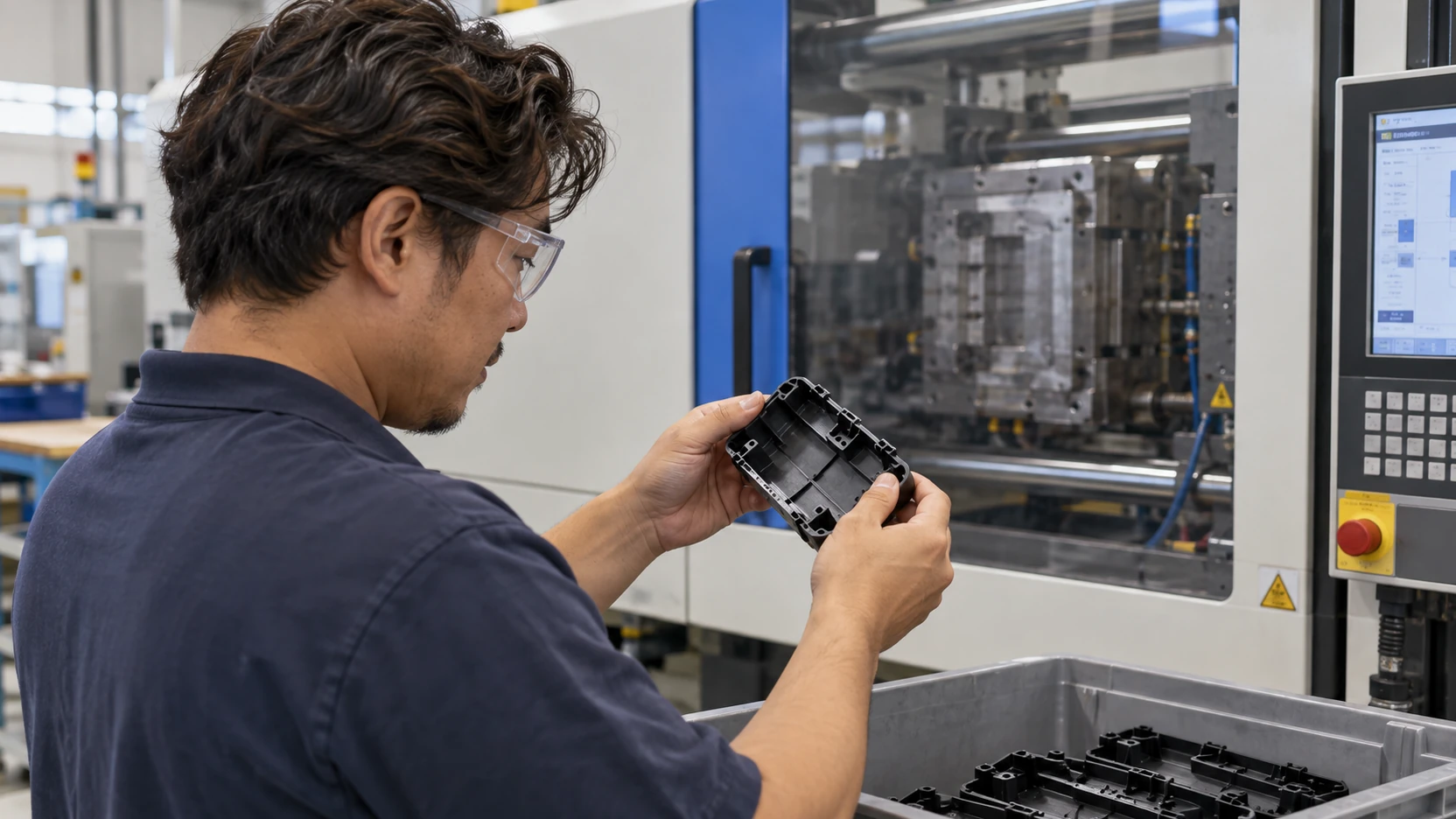
Metal and plastic molding machine operators set up, operate, or tend metal or plastic molding, casting, or coremaking machines to mold or cast metal or thermoplastic parts or products.
Opening this tab’s Trail…
Fictional preview only. Closing this tab or clearing browser data can remove this work; no account or cloud sync.
What the work involves
O*NET task statements for this occupation.
- Measure and visually inspect products for surface and dimension defects to ensure conformance to specifications, using precision measuring instruments.
- Observe continuous operation of automatic machines to ensure that products meet specifications and to detect jams or malfunctions, making adjustments as necessary.
- Set up, operate, or tend metal or plastic molding, casting, or coremaking machines to mold or cast metal or thermoplastic parts or products.
See 7 more tasks
- Turn valves and dials of machines to regulate pressure, temperature, and speed and feed rates, and to set cycle times.
- Read specifications, blueprints, and work orders to determine setups, temperatures, and time settings required to mold, form, or cast plastic materials, as well as to plan production sequences.
- Observe meters and gauges to verify and record temperatures, pressures, and press-cycle times.
- Connect water hoses to cooling systems of dies, using hand tools.
- Remove parts, such as dies, from machines after production runs are finished.
- Perform maintenance work such as cleaning and oiling machines.
- Smooth and clean inner surfaces of molds, using brushes, scrapers, air hoses, or grinding wheels, and fill imperfections with refractory material.
A question about this career
Which part of this work would you like to see in person? Save this career to your Trail and keep the question beside it.
Open my TrailSkills, knowledge and working conditions
Skills used
- Active Listening
- Reading Comprehension
- Monitoring
- Speaking
- Operations Monitoring
- Operation and Control
- Quality Control Analysis
- Time Management
Knowledge that helps
- Production and Processing
- Mechanical
- Mathematics
- English Language
- Administration and Management
- Physics
- People contact
- Constant contact with others · 39% selected this answer
- Time sitting
- Never · 77% selected this answer
- Outside in the weather
- Never · 77% selected this answer
- Teamwork
- Extremely important · 40% selected this answer
Education and training
- Typical entry education
- High school diploma or equivalent
- BLS figure for this job
- Overall preparation
- Job Zone 1–2
- Job Zone 1-2: Very Little to Some Preparation Needed
Training and experience
Usually requires a high school diploma or GED, though some occupations may not.
Moderate-term on-the-job training
Pay and employment
Median annual pay
$44,350
8 in 10 earn $34,170–$61,600 · May 2025 · BLS figure for this job
National job outlook
2025–35 · BLS figure for this job
Compare states on the map
Where people work
May 2025 · BLS state estimates
Hover to preview; select a state to keep its details. Zoom and scroll for a closer look, or use the state menu. On the map, arrow keys move through states alphabetically. Enter or Space selects a state.
These are jobs people already hold, not vacancies. Self-employed workers are not included.
About these figures and the map
Shading compares states with published estimates for Molding, Coremaking, and Casting Machine Setters, Operators, and Tenders, Metal and Plastic. Concentration means jobs in this occupation per 1,000 employed people in a state. Total jobs means estimated employment, not openings. The figures exclude self-employed workers. Striped gray states have no published estimate for the selected measure; that does not mean no one works there.
Boundaries: US Atlas / US Census. Larger states occupy more map area; their size does not indicate more jobs.
Occupation interest pattern
Interest pattern
What this work leans on
Career ratings are out of 7. Your completed quiz totals are out of 50. These are different scales; the overall pattern matters, not equal bar lengths or ability.
- Building (Realistic)7.0Career rating 7.0 of 7. No personal quiz comparison.
- Organizing (Conventional)4.3Career rating 4.3 of 7. No personal quiz comparison.
- Investigating (Investigative)2.3Career rating 2.3 of 7. No personal quiz comparison.
- Creating (Artistic)1.4Career rating 1.4 of 7. No personal quiz comparison.
- Helping (Social)1.1Career rating 1.1 of 7. No personal quiz comparison.
- Leading (Enterprising)1.1Career rating 1.1 of 7. No personal quiz comparison.
More specific themes
- Mechanics/Electronics
- Physical/Manual Labor
Related careers to explore
- Metal and Plastic Extrusion Operators
- Molders and Casters (Clay, Glass, Stone and More)
- Synthetic and Glass Fiber Machine Operators
- Industrial Forming and Pressing Operators
- Metal and Plastic Multi-Machine Operators
- Metal and Plastic Forging Operators
- Metal and Plastic Cutting Press Operators
- Metal and Plastic Rolling Operators
- Tool and Die Makers
- Metal and Plastic Heat-Treatment Operators
- Metal and Plastic Grinding Machine Operators
- Industrial Bonding Machine Operators
- Hand Grinding and Polishing Workers
- Industrial Machinery Mechanics
- Industrial Cutting and Slicing Operators
- Tool Sharpening Specialists
- Metal and Plastic Milling Machine Operators
- Woodworking Machine Operators
- Metal and Plastic Lathe Operators
- Welding and Soldering Machine Operators
Take a closer look
Investigate one question.
Choose something you still want to understand. Start with the information on this page, or look for a person describing their work.
- What does someone in this job spend time doing?
- What is challenging about the work, and how do they handle it?
- What changes when this job is done in a different workplace?
Find and check an example
This link searches Google in a new tab. Results have not been selected or checked by Kairos. Use your school’s browsing guidance; searching is optional.
The search uses this career’s public title, never your answers or notes.
- Check who made it, when it was made, and which job and workplace it describes.
- Look for a specific example that helps answer your question. A personal story describes one experience, not every job.
- Compare it with this page or a second source. Keep track of what is still uncertain.
For a closer comparison, explain why two people in the same occupation might describe different days.
If you want to return to this career, use “Save to my trail” above. In Trail, write a reason it interests you or a question to follow up.
Open my trail