
Electrical and Electronics Assemblers
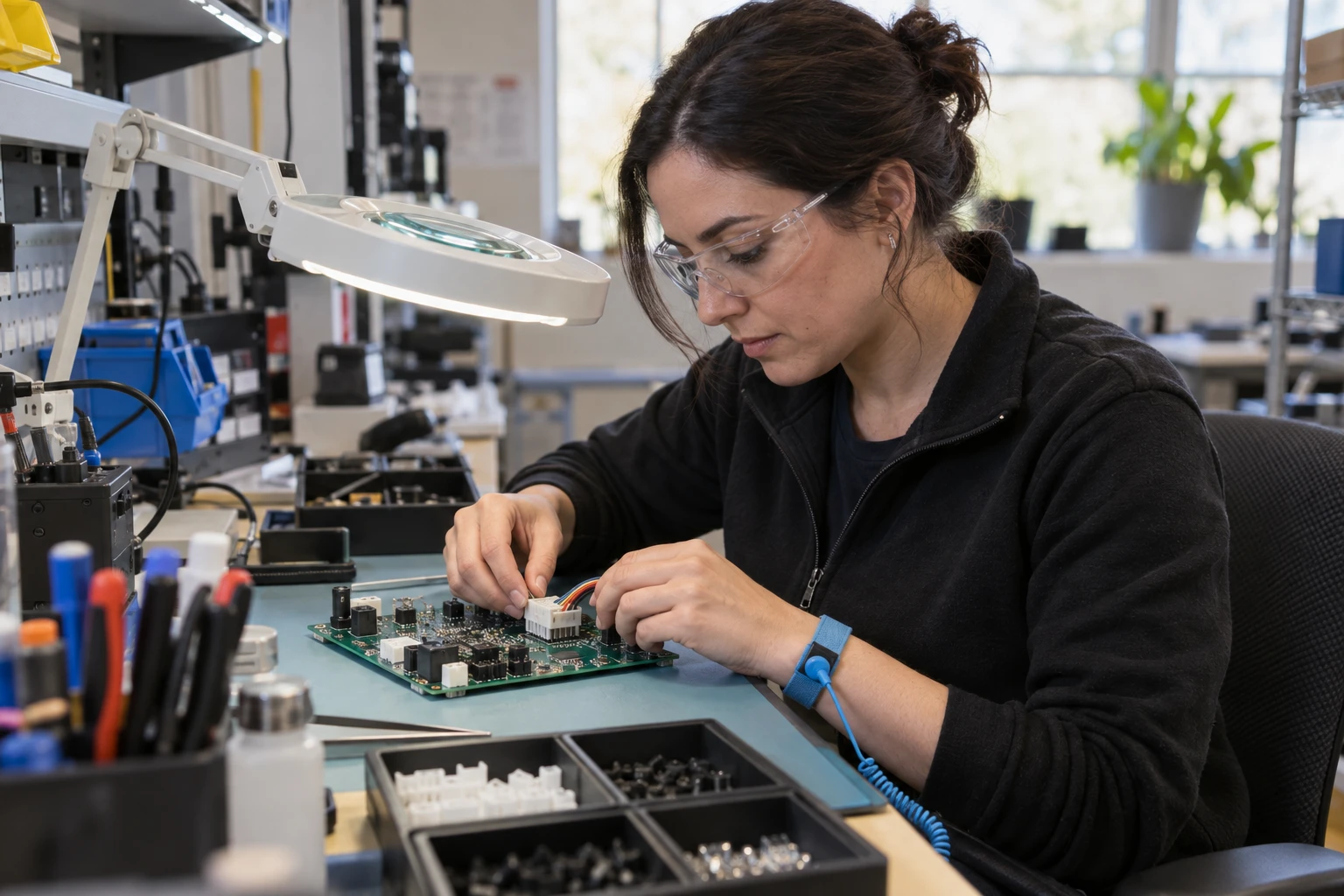
Electrical and electronics assemblers assemble or modify electrical or electronic equipment, such as computers, test equipment telemetering systems, electric motors, and batteries.
Opening this tab’s Trail…
Fictional preview only. Closing this tab or clearing browser data can remove this work; no account or cloud sync.
What the work involves
O*NET task statements for this occupation.
- Inspect or test wiring installations, assemblies, or circuits for resistance factors or for operation, and record results.
- Assemble electrical or electronic systems or support structures and install components, units, subassemblies, wiring, or assembly casings, using rivets, bolts, soldering or micro-welding equipment.
- Explain assembly procedures or techniques to other workers.
See 9 more tasks
- Confer with supervisors or engineers to plan or review work activities or to resolve production problems.
- Pack finished assemblies for shipment, and transport them to storage areas, using hoists or handtrucks.
- Clean parts, using cleaning solutions, air hoses, and cloths.
- Read and interpret schematic drawings, diagrams, blueprints, specifications, work orders, or reports to determine materials requirements or assembly instructions.
- Distribute materials, supplies, or subassemblies to work areas.
- Fabricate or form parts, coils, or structures according to specifications, using drills, calipers, cutters, or saws.
- Mark and tag components so that stock inventory can be tracked and identified.
- Position, align, or adjust workpieces or electrical parts to facilitate wiring or assembly.
- Adjust, repair, or replace electrical or electronic components to correct defects and to ensure conformance to specifications.
A question about this career
Which part of this work would you like to see in person? Save this career to your Trail and keep the question beside it.
Open my TrailSkills, knowledge and working conditions
Skills used
- Reading Comprehension
- Critical Thinking
- Active Listening
- Monitoring
- Operations Monitoring
- Judgment and Decision Making
- Coordination
- Complex Problem Solving
Knowledge that helps
- Production and Processing
- Administration and Management
- English Language
- Education and Training
- Mechanical
- Computers and Electronics
- Outside in the weather
- Never · 74% selected this answer
- In-person discussions
- Every day · 79% selected this answer
Education and training
- Typical entry education
- High school diploma or equivalent
- BLS group: Miscellaneous assemblers and fabricators
- Overall preparation
- Job Zone 1–2
- Job Zone 1-2: Very Little to Some Preparation Needed
Training and experience
Usually requires a high school diploma or GED, though some occupations may not.
Moderate-term on-the-job training
Pay and employment
Median annual pay
$44,650
8 in 10 earn $33,280–$64,880 · May 2025 · BLS group: Miscellaneous assemblers and fabricators
National job outlook
2025–35 · BLS group: Miscellaneous assemblers and fabricators
State figures are unavailable for this occupation in the current collection.
Occupation interest pattern
Interest pattern
What this work leans on
Career ratings are out of 7. Your completed quiz totals are out of 50. These are different scales; the overall pattern matters, not equal bar lengths or ability.
- Building (Realistic)7.0Career rating 7.0 of 7. No personal quiz comparison.
- Organizing (Conventional)4.0Career rating 4.0 of 7. No personal quiz comparison.
- Investigating (Investigative)3.3Career rating 3.3 of 7. No personal quiz comparison.
- Creating (Artistic)1.7Career rating 1.7 of 7. No personal quiz comparison.
- Helping (Social)1.2Career rating 1.2 of 7. No personal quiz comparison.
- Leading (Enterprising)1.0Career rating 1.0 of 7. No personal quiz comparison.
More specific themes
- Physical/Manual Labor
- Engineering
- Mechanics/Electronics
Related careers to explore
- Electromechanical Assemblers
- Aircraft Assemblers
- Engine and Machinery Assemblers
- Electric Motor and Power Tool Repairers
- Industrial Machinery Mechanics
- Industrial Electronics Repairers
- Welding and Soldering Machine Operators
- Electrical and Electronics Engineering Technicians
- Calibration Technicians
- Timing Device Assemblers
- Electrical Coil Makers
- Assembly Team Workers
- Transportation Electronics Technicians
- Metal and Plastic Model Makers
- Control and Valve Technicians
- Structural Metal Fabricators
- Machinists
- Metal and Plastic Multi-Machine Operators
- Welders and Metal Joining Specialists
- Mechanical Engineers
Take a closer look
Investigate one question.
Choose something you still want to understand. Start with the information on this page, or look for a person describing their work.
- What does someone in this job spend time doing?
- What is challenging about the work, and how do they handle it?
- What changes when this job is done in a different workplace?
Find and check an example
This link searches Google in a new tab. Results have not been selected or checked by Kairos. Use your school’s browsing guidance; searching is optional.
The search uses this career’s public title, never your answers or notes.
- Check who made it, when it was made, and which job and workplace it describes.
- Look for a specific example that helps answer your question. A personal story describes one experience, not every job.
- Compare it with this page or a second source. Keep track of what is still uncertain.
For a closer comparison, explain why two people in the same occupation might describe different days.
If you want to return to this career, use “Save to my trail” above. In Trail, write a reason it interests you or a question to follow up.
Open my trail