
Plumbers, Pipefitters and Steamfitters
Plumbers, pipefitters, and steamfitters install and repair piping fixtures and systems.
Opening this tab’s Trail…
Fictional preview only. Closing this tab or clearing browser data can remove this work; no account or cloud sync.
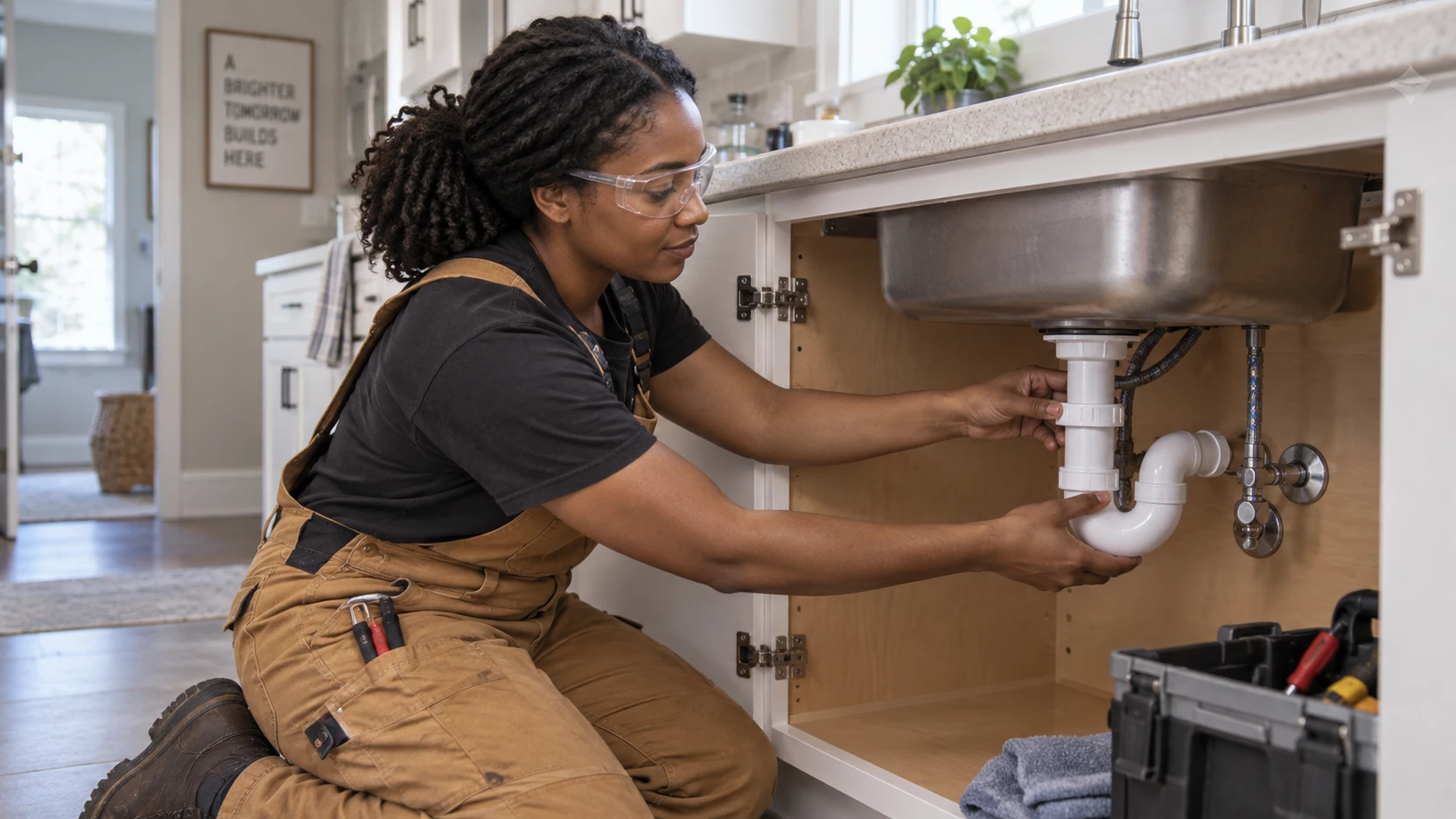
What the work involves
O*NET task statements for this occupation.
- Shut off steam, water, or other gases or liquids from pipe sections, using valve keys or wrenches.
- Install underground storm, sanitary, or water piping systems, extending piping as needed to connect fixtures and plumbing.
- Assemble pipe sections, tubing, or fittings, using couplings, clamps, screws, bolts, cement, plastic solvent, caulking, or soldering, brazing, or welding equipment.
See 21 more tasks
- Locate and mark the position of pipe installations, connections, passage holes, or fixtures in structures, using measuring instruments such as rulers or levels.
- Cut, thread, or hammer pipes to specifications, using tools such as saws, cutting torches, pipe threaders, or pipe benders.
- Lay out full scale drawings of pipe systems, supports, or related equipment, according to blueprints.
- Plan pipe system layout, installation, or repair, according to specifications.
- Review blueprints, building codes, or specifications to determine work details or procedures.
- Select pipe sizes, types, or related materials, such as supports, hangers, or hydraulic cylinders, according to specifications.
- Fill pipes or plumbing fixtures with water or air and observe pressure gauges to detect and locate leaks.
- Direct helpers engaged in pipe cutting, preassembly, or installation of plumbing systems or components.
- Inspect, examine, or test installed systems or pipe lines, using pressure gauge, hydrostatic testing, observation, or other methods.
- Install pipe assemblies, fittings, valves, appliances such as dishwashers or water heaters, or fixtures such as sinks or toilets, using hand or power tools.
- Anchor steel supports from ceiling joists to hold pipes in place.
- Attach pipes to walls, structures, or fixtures, such as radiators or tanks, using brackets, clamps, tools, or welding equipment.
- Modify, clean, or maintain pipe systems, units, fittings, or related machines or equipment, using hand or power tools.
- Install automatic controls to regulate pipe systems.
- Estimate time, material, or labor costs for use in project plans.
- Keep records of work assignments.
- Inspect structures to assess material or equipment needs, to establish the sequence of pipe installations, or to plan installation around obstructions, such as electrical wiring.
- Maintain or repair plumbing by replacing defective washers, replacing or mending broken pipes, or opening clogged drains.
- Repair or remove and replace system components.
- Cut openings in structures to accommodate pipes or pipe fittings, using hand or power tools.
- Install green plumbing equipment, such as faucet flow restrictors, dual-flush or pressure-assisted flush toilets, or tankless hot water heaters.
A question about this career
Which part of this work would you like to see in person? Save this career to your Trail and keep the question beside it.
Open my TrailSkills, knowledge and working conditions
Skills used
- Critical Thinking
- Monitoring
- Speaking
- Reading Comprehension
- Troubleshooting
- Repairing
- Judgment and Decision Making
- Coordination
Knowledge that helps
- Building and Construction
- Mechanical
- Design
- Mathematics
- Customer and Personal Service
- Administration and Management
- People contact
- Constant contact with others · 54% selected this answer
- Time sitting
- Never · 64% selected this answer
- Outside in the weather
- Once a week or more but not every day · 47% selected this answer
- Teamwork
- Extremely important · 44% selected this answer
Education and training
- Typical entry education
- High school diploma or equivalent
- BLS figure for this job
- Overall preparation
- Job Zone 3
- Job Zone Three: Medium Preparation Needed
Training and experience
Most occupations in this zone require training in vocational schools, related on-the-job experience, or an associate's degree.
Apprenticeship
Pay and employment
Median annual pay
$63,800
8 in 10 earn $44,150–$108,420 · May 2025 · BLS figure for this job
National job outlook
2025–35 · BLS figure for this job
Compare states on the map
Where people work
May 2025 · BLS state estimates
Hover to preview; select a state to keep its details. Zoom and scroll for a closer look, or use the state menu. On the map, arrow keys move through states alphabetically. Enter or Space selects a state.
These are jobs people already hold, not vacancies. Self-employed workers are not included.
About these figures and the map
Shading compares states with published estimates for Plumbers, Pipefitters, and Steamfitters. Concentration means jobs in this occupation per 1,000 employed people in a state. Total jobs means estimated employment, not openings. The figures exclude self-employed workers. Striped gray states have no published estimate for the selected measure; that does not mean no one works there.
Boundaries: US Atlas / US Census. Larger states occupy more map area; their size does not indicate more jobs.
Occupation interest pattern
Interest pattern
What this work leans on
Career ratings are out of 7. Your completed quiz totals are out of 50. These are different scales; the overall pattern matters, not equal bar lengths or ability.
- Building (Realistic)7.0Career rating 7.0 of 7. No personal quiz comparison.
- Organizing (Conventional)3.7Career rating 3.7 of 7. No personal quiz comparison.
- Investigating (Investigative)2.2Career rating 2.2 of 7. No personal quiz comparison.
- Helping (Social)1.2Career rating 1.2 of 7. No personal quiz comparison.
- Creating (Artistic)1.0Career rating 1.0 of 7. No personal quiz comparison.
- Leading (Enterprising)1.0Career rating 1.0 of 7. No personal quiz comparison.
More specific themes
- Engineering
- Mechanics/Electronics
- Physical/Manual Labor
Related careers to explore
- Boilermakers
- Pipelayers
- General Maintenance Technicians
- Septic and Sewer Service Technicians
- Control and Valve Technicians
- HVAC and Refrigeration Technicians
- Stationary Engine and Boiler Operators
- Construction Laborers
- Electricians
- Aircraft Assemblers
- Sheet Metal Workers
- Structural Steel and Iron Workers
- Building Insulation Installers
- Millwrights
- Engine and Machinery Assemblers
- Carpenters
Take a closer look
Investigate one question.
Choose something you still want to understand. Start with the information on this page, or look for a person describing their work.
- What does someone in this job spend time doing?
- What is challenging about the work, and how do they handle it?
- What changes when this job is done in a different workplace?
Find and check an example
This link searches Google in a new tab. Results have not been selected or checked by Kairos. Use your school’s browsing guidance; searching is optional.
The search uses this career’s public title, never your answers or notes.
- Check who made it, when it was made, and which job and workplace it describes.
- Look for a specific example that helps answer your question. A personal story describes one experience, not every job.
- Compare it with this page or a second source. Keep track of what is still uncertain.
For a closer comparison, explain why two people in the same occupation might describe different days.
If you want to return to this career, use “Save to my trail” above. In Trail, write a reason it interests you or a question to follow up.
Open my trail