
Home Health Aides
Home health aides monitor the health status of an individual with disabilities or illness, and address their health-related needs, such as changing bandages, dressing wounds, or administering medication.
Opening this tab’s Trail…
Fictional preview only. Closing this tab or clearing browser data can remove this work; no account or cloud sync.
What the work involves
O*NET task statements for this occupation.
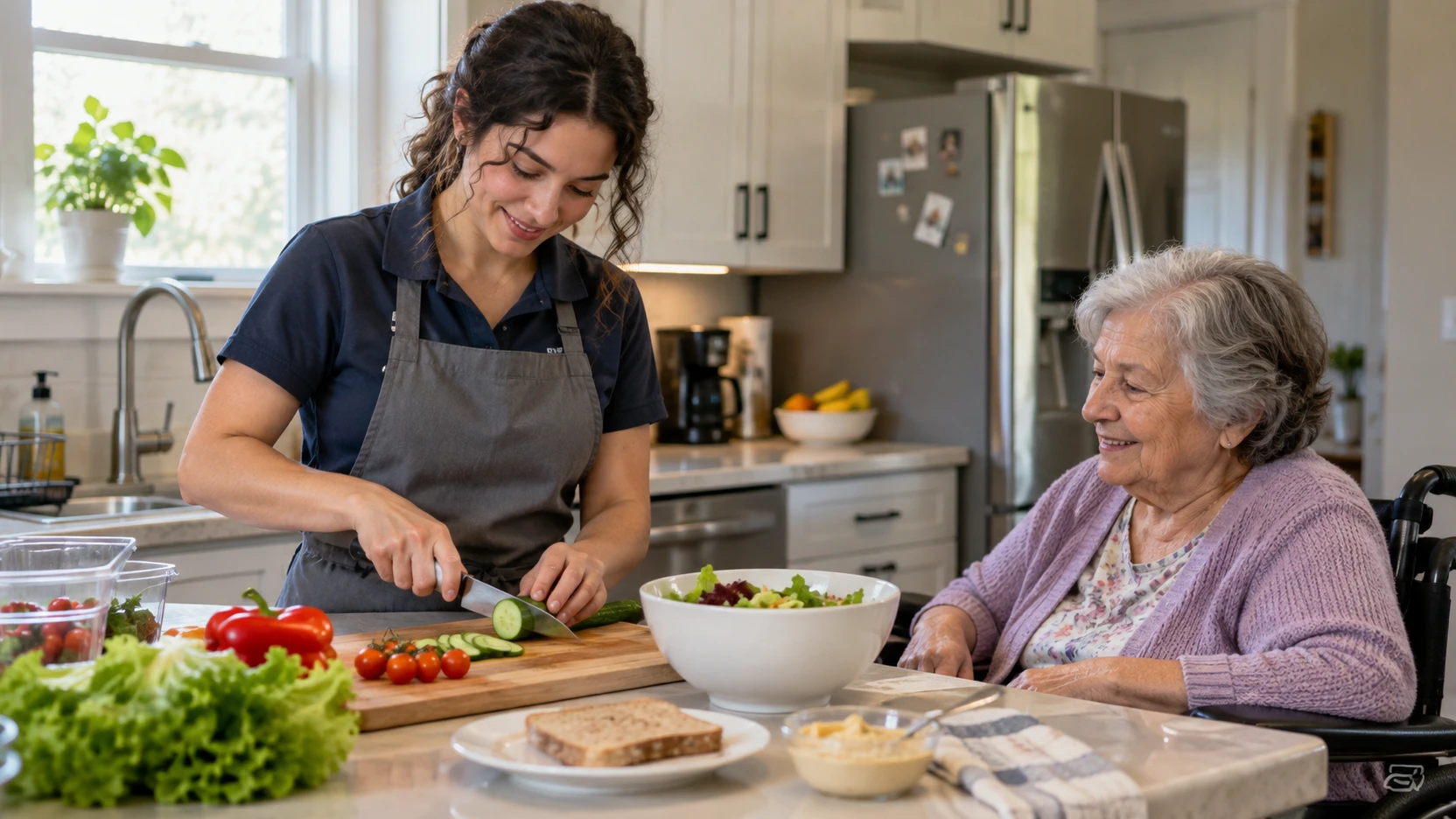
- Plan, purchase, prepare, or serve meals to patients or other family members, according to prescribed diets.
- Care for patients by changing bed linens, washing and ironing laundry, cleaning, or assisting with their personal care.
- Bathe patients.
See 9 more tasks
- Maintain records of patient care, condition, progress, or problems to report and discuss observations with supervisor or case manager.
- Provide patients with help moving in and out of beds, baths, wheelchairs, or automobiles and with dressing and grooming.
- Check patients' pulse, temperature, and respiration.
- Entertain, converse with, or read aloud to patients to keep them mentally healthy and alert.
- Provide patients and families with emotional support and instruction in areas such as caring for infants, preparing healthy meals, living independently, or adapting to disability or illness.
- Direct patients in simple prescribed exercises or in the use of braces or artificial limbs.
- Accompany clients to doctors' offices or on other trips outside the home, providing transportation, assistance, and companionship.
- Administer prescribed oral medications, under the written direction of physician or as directed by home care nurse or aide, and ensure patients take their medicine.
- Perform a variety of duties as requested by client, such as obtaining household supplies or running errands.
A question about this career
Which part of this work would you like to see in person? Save this career to your Trail and keep the question beside it.
Open my TrailSkills, knowledge and working conditions
Skills used
- Active Listening
- Reading Comprehension
- Monitoring
- Speaking
- Service Orientation
- Social Perceptiveness
- Time Management
- Instructing
Knowledge that helps
- Psychology
- Customer and Personal Service
- Medicine and Dentistry
- English Language
- Public Safety and Security
- Therapy and Counseling
- People contact
- Constant contact with others · 79% selected this answer
- Outside in the weather
- Never · 81% selected this answer
- In-person discussions
- Every day · 45% selected this answer
- Time standing
- Continually or almost continually · 59% selected this answer
Education and training
- Typical entry education
- High school diploma or equivalent
- BLS group: Home health and personal care aides
- Overall preparation
- Job Zone 1–2
- Job Zone 1-2: Very Little to Some Preparation Needed
Training and experience
Usually requires a high school diploma or GED, though some occupations may not.
Short-term on-the-job training
Pay and employment
Median annual pay
$35,800
8 in 10 earn $27,040–$45,040 · May 2025 · BLS group: Home health and personal care aides
National job outlook
2025–35 · BLS group: Home health and personal care aides
State figures are unavailable for this occupation in the current collection.
Occupation interest pattern
Interest pattern
What this work leans on
Career ratings are out of 7. Your completed quiz totals are out of 50. These are different scales; the overall pattern matters, not equal bar lengths or ability.
- Helping (Social)6.3Career rating 6.3 of 7. No personal quiz comparison.
- Building (Realistic)4.2Career rating 4.2 of 7. No personal quiz comparison.
- Organizing (Conventional)3.5Career rating 3.5 of 7. No personal quiz comparison.
- Investigating (Investigative)3.2Career rating 3.2 of 7. No personal quiz comparison.
- Leading (Enterprising)1.8Career rating 1.8 of 7. No personal quiz comparison.
- Creating (Artistic)1.5Career rating 1.5 of 7. No personal quiz comparison.
More specific themes
- Personal Service
- Health Care Service
- Social Service
Related careers to explore
- Nursing Assistants
- Personal Care Aides
- Paramedics
- Psychiatric Technicians
- Licensed Practical and Vocational Nurses
- Emergency Medical Technicians
- Physical Therapist Assistants
- Occupational Therapy Assistants
- Nurse Practitioners
- Registered Nurses
- Medical Assistants
- Recreational Therapists
- Family Doctors
- Occupational Therapists
- Emergency Physicians
- Clinical Nurse Specialists
Take a closer look
Investigate one question.
Choose something you still want to understand. Start with the information on this page, or look for a person describing their work.
- What does someone in this job spend time doing?
- What is challenging about the work, and how do they handle it?
- What changes when this job is done in a different workplace?
Find and check an example
This link searches Google in a new tab. Results have not been selected or checked by Kairos. Use your school’s browsing guidance; searching is optional.
The search uses this career’s public title, never your answers or notes.
- Check who made it, when it was made, and which job and workplace it describes.
- Look for a specific example that helps answer your question. A personal story describes one experience, not every job.
- Compare it with this page or a second source. Keep track of what is still uncertain.
For a closer comparison, explain why two people in the same occupation might describe different days.
If you want to return to this career, use “Save to my trail” above. In Trail, write a reason it interests you or a question to follow up.
Open my trail