
Biomedical and Biological Engineers
Bioengineers and biomedical engineers combine engineering principles with sciences to design and create equipment, devices, computer systems, and software.
Opening this tab’s Trail…
Fictional preview only. Closing this tab or clearing browser data can remove this work; no account or cloud sync.
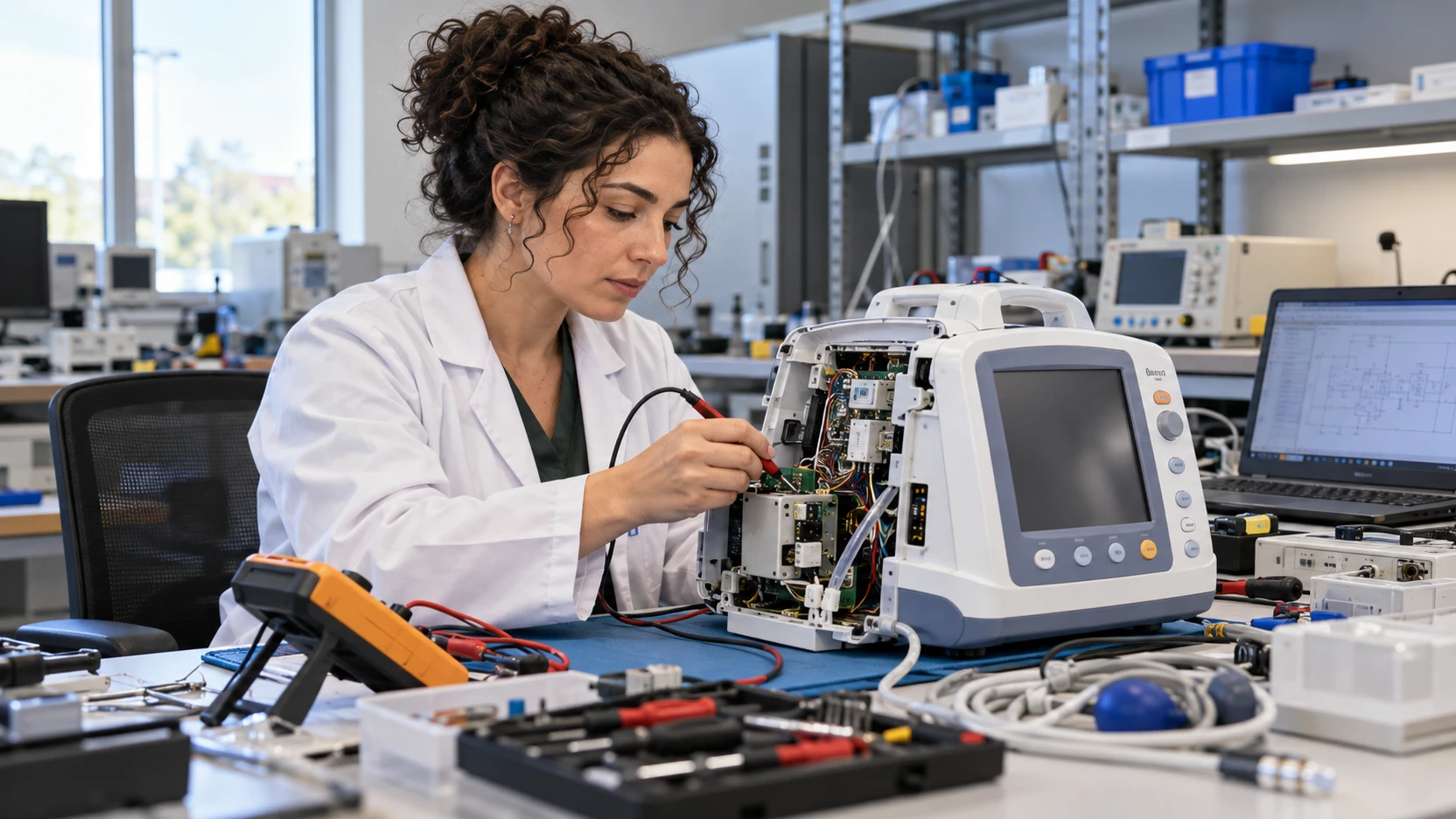
What the work involves
O*NET task statements for this occupation.
- Evaluate the safety, efficiency, and effectiveness of biomedical equipment.
- Prepare technical reports, data summary documents, or research articles for scientific publication, regulatory submissions, or patent applications.
- Design or develop medical diagnostic or clinical instrumentation, equipment, or procedures, using the principles of engineering and biobehavioral sciences.
See 20 more tasks
- Conduct research, along with life scientists, chemists, and medical scientists, on the engineering aspects of the biological systems of humans and animals.
- Adapt or design computer hardware or software for medical science uses.
- Maintain databases of experiment characteristics or results.
- Develop statistical models or simulations, using statistical or modeling software.
- Read current scientific or trade literature to stay abreast of scientific, industrial, or technological advances.
- Manage teams of engineers by creating schedules, tracking inventory, creating or using budgets, or overseeing contract obligations or deadlines.
- Develop models or computer simulations of human biobehavioral systems to obtain data for measuring or controlling life processes.
- Design or conduct follow-up experimentation, based on generated data, to meet established process objectives.
- Write documents describing protocols, policies, standards for use, maintenance, and repair of medical equipment.
- Communicate with bioregulatory authorities regarding licensing or compliance responsibilities.
- Develop methodologies for transferring procedures or biological processes from laboratories to commercial-scale manufacturing production.
- Collaborate with manufacturing or quality assurance staff to prepare product specification or safety sheets, standard operating procedures, user manuals, or qualification and validation reports.
- Research new materials to be used for products, such as implanted artificial organs.
- Prepare project plans for equipment or facility improvements, including time lines, budgetary estimates, or capital spending requests.
- Consult with chemists or biologists to develop or evaluate novel technologies.
- Confer with research and biomanufacturing personnel to ensure the compatibility of design and production.
- Recommend process formulas, instrumentation, or equipment specifications, based on results of bench or pilot experimentation.
- Communicate with suppliers regarding the design or specifications of bioproduction equipment, instrumentation, or materials.
- Conduct training or in-services to educate clinicians and other personnel on proper use of equipment.
- Advise hospital administrators on the planning, acquisition, and use of medical equipment.
A question about this career
Which part of this work would you like to see in person? Save this career to your Trail and keep the question beside it.
Open my TrailSkills, knowledge and working conditions
Skills used
- Reading Comprehension
- Active Listening
- Writing
- Speaking
- Complex Problem Solving
- Judgment and Decision Making
- Operations Analysis
- Systems Analysis
Knowledge that helps
- Engineering and Technology
- Computers and Electronics
- Mathematics
- Design
- Physics
- Biology
- People contact
- Contact with others most of the time · 48% selected this answer
- Time sitting
- More than half the time · 65% selected this answer
- Outside in the weather
- Never · 78% selected this answer
- Teamwork
- Extremely important · 48% selected this answer
Education and training
- Typical entry education
- Bachelor's degree
- BLS figure for this job
- Overall preparation
- Job Zone 4
- Job Zone Four: Considerable Preparation Needed
Training and experience
Most of these occupations require a four-year bachelor's degree, but some do not.
None
Pay and employment
Median annual pay
$109,370
8 in 10 earn $71,850–$168,180 · May 2025 · BLS figure for this job
National job outlook
2025–35 · BLS figure for this job
Compare states on the map
Where people work
May 2025 · BLS state estimates
Hover to preview; select a state to keep its details. Zoom and scroll for a closer look, or use the state menu. On the map, arrow keys move through states alphabetically. Enter or Space selects a state.
These are jobs people already hold, not vacancies. Self-employed workers are not included.
About these figures and the map
Shading compares states with published estimates for Bioengineers and Biomedical Engineers. Concentration means jobs in this occupation per 1,000 employed people in a state. Total jobs means estimated employment, not openings. The figures exclude self-employed workers. Striped gray states have no published estimate for the selected measure; that does not mean no one works there.
Boundaries: US Atlas / US Census. Larger states occupy more map area; their size does not indicate more jobs.
Occupation interest pattern
Interest pattern
What this work leans on
Career ratings are out of 7. Your completed quiz totals are out of 50. These are different scales; the overall pattern matters, not equal bar lengths or ability.
- Investigating (Investigative)6.8Career rating 6.8 of 7. No personal quiz comparison.
- Building (Realistic)5.4Career rating 5.4 of 7. No personal quiz comparison.
- Organizing (Conventional)4.5Career rating 4.5 of 7. No personal quiz comparison.
- Helping (Social)2.5Career rating 2.5 of 7. No personal quiz comparison.
- Creating (Artistic)2.1Career rating 2.1 of 7. No personal quiz comparison.
- Leading (Enterprising)1.8Career rating 1.8 of 7. No personal quiz comparison.
More specific themes
- Health Care Service
- Information Technology
- Physical Science
- Mathematics/Statistics
Related careers to explore
- Nanotechnology Technicians
- Nanosystems Engineers
- Bioinformatics Scientists
- Biochemists and Biophysicists
- Bioinformatics Technicians
- Data Scientists
- Industrial Engineering Technicians
- Chemists
- Chemical Engineers
- Medical Laboratory Technologists
- Natural Sciences Managers
- Medical Equipment Repairers
- Calibration Technicians
- Microbiologists
- Biological Technicians
- Mechanical Engineering Technicians
- Geneticists
- Materials Scientists
Take a closer look
Investigate one question.
Choose something you still want to understand. Start with the information on this page, or look for a person describing their work.
- What does someone in this job spend time doing?
- What is challenging about the work, and how do they handle it?
- What changes when this job is done in a different workplace?
Find and check an example
This link searches Google in a new tab. Results have not been selected or checked by Kairos. Use your school’s browsing guidance; searching is optional.
The search uses this career’s public title, never your answers or notes.
- Check who made it, when it was made, and which job and workplace it describes.
- Look for a specific example that helps answer your question. A personal story describes one experience, not every job.
- Compare it with this page or a second source. Keep track of what is still uncertain.
For a closer comparison, explain why two people in the same occupation might describe different days.
If you want to return to this career, use “Save to my trail” above. In Trail, write a reason it interests you or a question to follow up.
Open my trail