
Software Quality Analysts and Testers
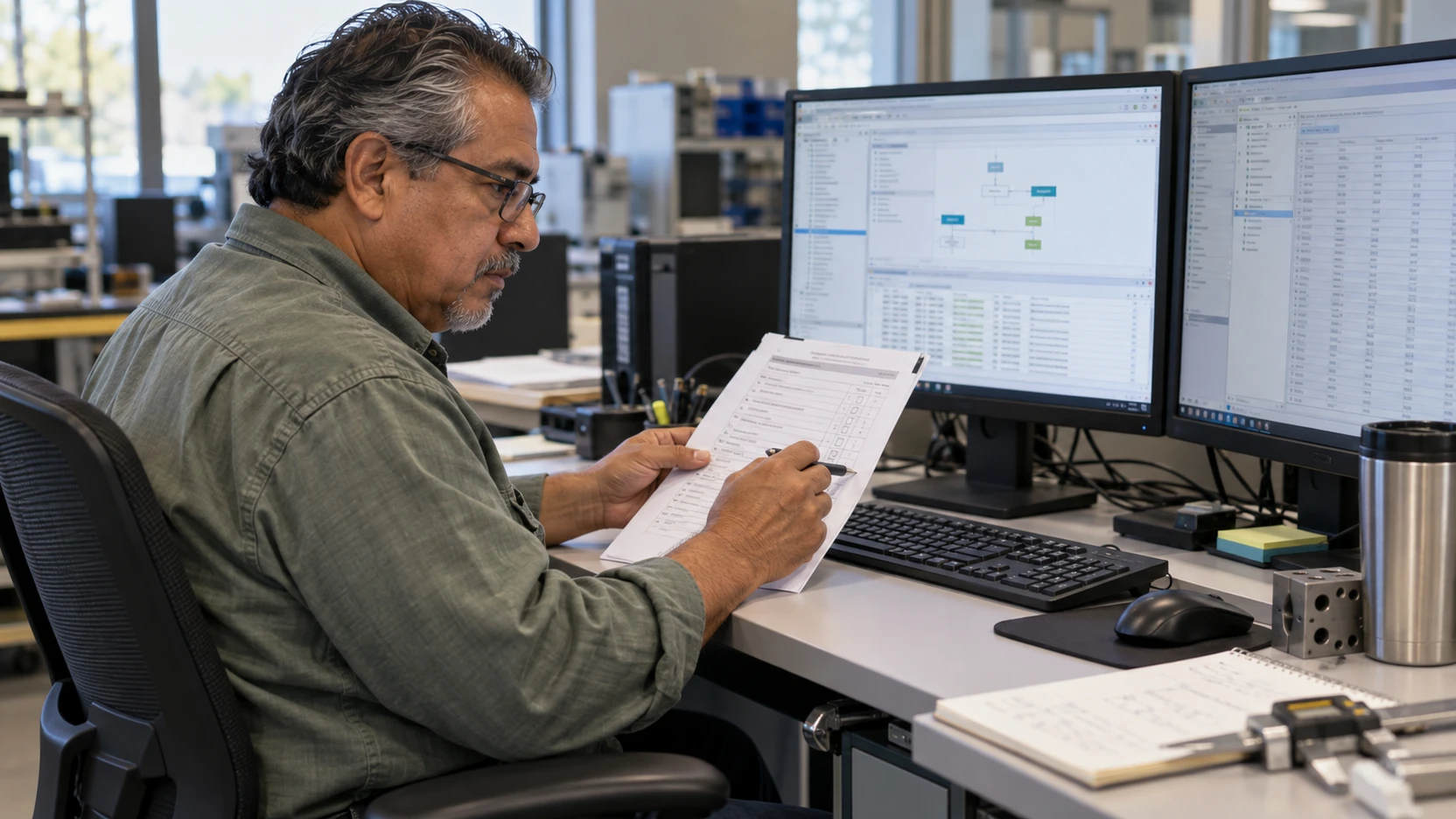
Software quality analysts and testers develop and execute software tests to identify software problems and their causes.
Opening this tab’s Trail…
Fictional preview only. Closing this tab or clearing browser data can remove this work; no account or cloud sync.
What the work involves
O*NET task statements for this occupation.
- Identify, analyze, and document problems with program function, output, online screen, or content.
- Document software defects, using a bug tracking system, and report defects to software developers.
- Develop testing programs that address areas such as database impacts, software scenarios, regression testing, negative testing, error or bug retests, or usability.
See 21 more tasks
- Design test plans, scenarios, scripts, or procedures.
- Document test procedures to ensure replicability and compliance with standards.
- Provide feedback and recommendations to developers on software usability and functionality.
- Install, maintain, or use software testing programs.
- Test system modifications to prepare for implementation.
- Create or maintain databases of known test defects.
- Develop or specify standards, methods, or procedures to determine product quality or release readiness.
- Monitor bug resolution efforts and track successes.
- Update automated test scripts to ensure currency.
- Participate in product design reviews to provide input on functional requirements, product designs, schedules, or potential problems.
- Plan test schedules or strategies in accordance with project scope or delivery dates.
- Monitor program performance to ensure efficient and problem-free operations.
- Conduct software compatibility tests with programs, hardware, operating systems, or network environments.
- Investigate customer problems referred by technical support.
- Review software documentation to ensure technical accuracy, compliance, or completeness, or to mitigate risks.
- Identify program deviance from standards, and suggest modifications to ensure compliance.
- Perform initial debugging procedures by reviewing configuration files, logs, or code pieces to determine breakdown source.
- Design or develop automated testing tools.
- Install and configure recreations of software production environments to allow testing of software performance.
- Collaborate with field staff or customers to evaluate or diagnose problems and recommend possible solutions.
- Coordinate user or third-party testing.
A question about this career
Which part of this work would you like to see in person? Save this career to your Trail and keep the question beside it.
Open my TrailSkills, knowledge and working conditions
Skills used
- Reading Comprehension
- Active Listening
- Speaking
- Critical Thinking
- Programming
- Complex Problem Solving
- Quality Control Analysis
- Systems Evaluation
Knowledge that helps
- Computers and Electronics
- English Language
- Mathematics
- Engineering and Technology
- Design
- Education and Training
- People contact
- Contact with others most of the time · 47% selected this answer
- Time sitting
- Continually or almost continually · 71% selected this answer
- Outside in the weather
- Never · 88% selected this answer
- Teamwork
- Extremely important · 58% selected this answer
Education and training
- Typical entry education
- Bachelor's degree
- BLS figure for this job
- Overall preparation
- Job Zone 4
- Job Zone Four: Considerable Preparation Needed
Training and experience
Most of these occupations require a four-year bachelor's degree, but some do not.
None
Pay and employment
Median annual pay
$104,300
8 in 10 earn $61,440–$167,010 · May 2025 · BLS figure for this job
National job outlook
2025–35 · BLS figure for this job
Compare states on the map
Where people work
May 2025 · BLS state estimates
Hover to preview; select a state to keep its details. Zoom and scroll for a closer look, or use the state menu. On the map, arrow keys move through states alphabetically. Enter or Space selects a state.
These are jobs people already hold, not vacancies. Self-employed workers are not included.
About these figures and the map
Shading compares states with published estimates for Software Quality Assurance Analysts and Testers. Concentration means jobs in this occupation per 1,000 employed people in a state. Total jobs means estimated employment, not openings. The figures exclude self-employed workers. Striped gray states have no published estimate for the selected measure; that does not mean no one works there.
Boundaries: US Atlas / US Census. Larger states occupy more map area; their size does not indicate more jobs.
Occupation interest pattern
Interest pattern
What this work leans on
Career ratings are out of 7. Your completed quiz totals are out of 50. These are different scales; the overall pattern matters, not equal bar lengths or ability.
- Investigating (Investigative)5.8Career rating 5.8 of 7. No personal quiz comparison.
- Organizing (Conventional)5.7Career rating 5.7 of 7. No personal quiz comparison.
- Building (Realistic)3.8Career rating 3.8 of 7. No personal quiz comparison.
- Creating (Artistic)1.7Career rating 1.7 of 7. No personal quiz comparison.
- Leading (Enterprising)1.6Career rating 1.6 of 7. No personal quiz comparison.
- Helping (Social)1.5Career rating 1.5 of 7. No personal quiz comparison.
More specific themes
- Mathematics/Statistics
- Engineering
- Information Technology
Related careers to explore
- Software Developers
- Computer Systems Engineers
- Cybersecurity Testers
- Computer Systems Analysts
- Database Architects
- Computer Programmers
- Computer Hardware Engineers
- Cybersecurity Engineers
- Database Administrators
- Calibration Technicians
- Web and App Interface Designers
- Network and Systems Administrators
- Quality Control Analysts
- Industrial Engineers
- Quality Control Managers
- Electronics Engineers
- Electrical and Electronics Engineering Technicians
Take a closer look
Investigate one question.
Choose something you still want to understand. Start with the information on this page, or look for a person describing their work.
- What does someone in this job spend time doing?
- What is challenging about the work, and how do they handle it?
- What changes when this job is done in a different workplace?
Find and check an example
This link searches Google in a new tab. Results have not been selected or checked by Kairos. Use your school’s browsing guidance; searching is optional.
The search uses this career’s public title, never your answers or notes.
- Check who made it, when it was made, and which job and workplace it describes.
- Look for a specific example that helps answer your question. A personal story describes one experience, not every job.
- Compare it with this page or a second source. Keep track of what is still uncertain.
For a closer comparison, explain why two people in the same occupation might describe different days.
If you want to return to this career, use “Save to my trail” above. In Trail, write a reason it interests you or a question to follow up.
Open my trail